


 Chinese
 Spanish
 Russian
 Portuguese
 French
 German
 Indonesian
 Thai
 Vietnamese
 Arabic
 Italian
 Turkish
 Polish
 Japanese


Industrial RTU commissioning should prove field acquisition before platform reporting. A device can appear online while reading the wrong input, using an incorrect scale or retransmitting an old value. Separate cabinet checks, local measurements, remote mapping and recovery tests so each sign-off has a clear meaning.
Turn the point list into a wiring and test record
Start with the actual source for every point: a wired analogue signal, contact, pulse or serial register. Record the channel, source range, engineering unit, expected update interval and receiving tag. Mark read-only monitoring separately from outputs that could operate equipment. Spare terminals are not permission to add a different signal type.
The METRAVON TG501 is a compact example with three analogue inputs, two digital inputs and one RS485 interface in its reference configuration. Of its two listed RS232 ports, one is for debugging. Confirm input variants and optional relay, pulse or expansion functions against the supplied unit before assigning channels.
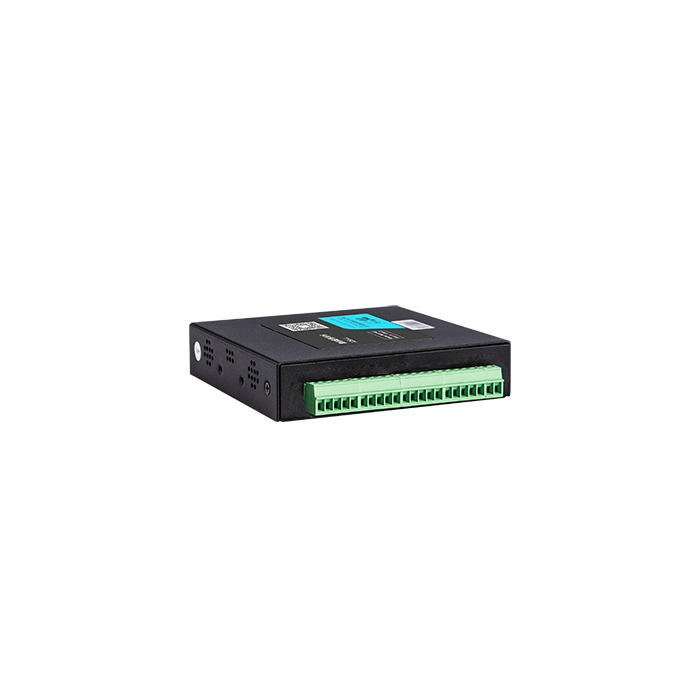
Inspect the cabinet before connecting field circuits
TG501 has a published DC 5-35 V supply range and IP30 enclosure rating. These figures do not make it a weatherproof outdoor assembly or establish power available for connected instruments. Check the full cabinet supply budget, protective devices, terminal polarity and cable entries. Account for accessories and transmission demand rather than sizing the supply from a typical idle-current figure.
Mount the antenna and route its feeder according to the selected radio module and site design. Keep access to service terminals and leave space to identify cables. An outdoor project needs suitable enclosure protection and environmental control for the complete assembly. Resolve condensation, surge exposure and cable routing before energising.
Four hold points for industrial RTU commissioning
| Stage | Evidence to retain | Release condition |
|---|---|---|
| Cabinet | Supply checks, terminal schedule and installed hardware record. | The delivered assembly matches the approved electrical and environmental design. |
| Field | Known source values and the RTU's corresponding readings and status. | Each assigned channel is identified and interpreted correctly before remote mapping. |
| Platform | Source-to-destination comparison with time, unit and quality. | The receiving application uses the intended point and distinguishes invalid data. |
| Recovery | Results from approved communication and restart tests. | Recovery meets the project's data and operating requirements without unexplained gaps. |
Test the input type that was actually supplied
For an analogue channel, confirm whether the ordered input accepts the required current or voltage signal. Check transmitter power and any isolation arrangement independently. Under an approved test procedure, compare several known values across the working span and verify the displayed unit. Do not inject a voltage into a current-only input or assume that the RTU powers every connected transmitter.
For a digital input, establish whether the source is a contact or a powered output and use the specified wiring. Prove both states and any configured delay. A successful contact-state test does not establish pulse-counting performance; pulse functions and timing limits need confirmation for that configuration.
For serial acquisition, confirm one instrument locally before enabling the complete poll list. Save the register definition and a raw-value comparison. Use Modbus RTU diagnostic checks when a request or decoding step fails, instead of changing the cellular connection.
Approve the remote path and the failure response separately
Record the destination, account ownership, access rules and any required certificates. Use the project's approved remote-access method; a working connection does not justify exposing management ports publicly. Determine who maintains SIM service and platform credentials so the handover does not depend on an installer's personal account.
Compare a real field change with its final platform record, including sample time and quality. Then test the agreed failure cases during a safe window. TG501 lists local storage and retransmission, but retention depends on the configured records and firmware. Use a defined record set to verify recovery, not only the return of an online icon. The outage storage and recovery guide explains the separate buffer decisions.
Handover questions
Q1. Can the platform be connected before every field device is ready?
Yes, for a clearly labelled network or integration test. Keep simulated and incomplete points separate from accepted operational data. Record which stages remain open; platform connectivity must not be signed off as completion of field commissioning.
Q2. Should a remote output be tested with the actuator connected?
Only under the approved operating and safety procedure. First establish the configured logic, permissions and expected loss-of-communication behaviour. The site must control any physical actuation test and confirm the final safe operating state.
Q3. What should accompany the installed RTU?
Deliver the as-built terminal and point schedules, configuration backup, firmware identity, test results and recovery instructions. Transfer credentials through the customer's approved secure channel rather than embedding them in general commissioning reports.
Summary
Accept an RTU by the measurements and recovery behaviour it demonstrates, not by its connection status. For a TG501 configuration and quotation review, submit the point list, input types, cabinet supply, communication requirements and intended platform before installation work begins.
