Chinese
 Spanish
 Russian
 Portuguese
 French
 German
 Indonesian
 Thai
Thai Vietnamese
 Arabic
 Italian
 Turkish
 Polish
 Japanese

selection summary
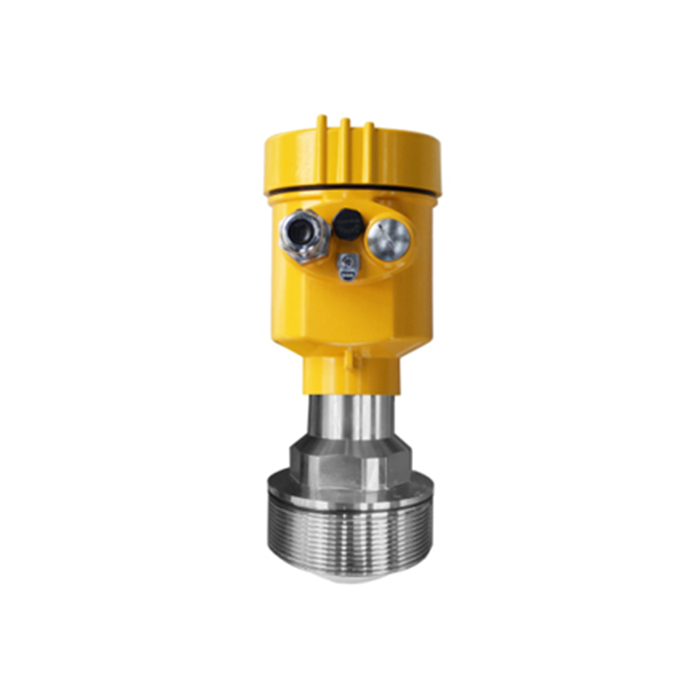
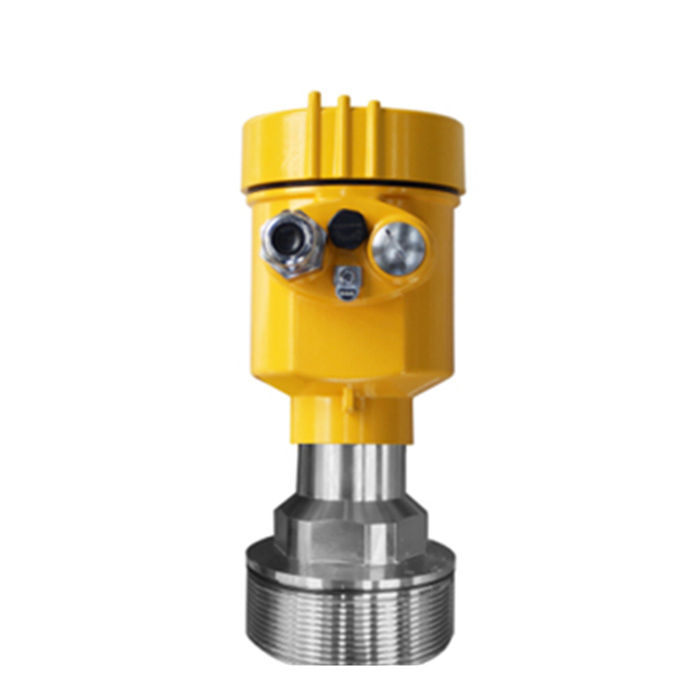
MV-RD13 is a wide-range 80 GHz radar level meter, mainly used for liquid/solid measurement. The reference range is 0.05-30m; 0.10-150m. It is suitable for pharmaceutical raw material tanks, preparation tanks, metallurgical and chemical mixing reactors, and light oil storage tanks with waveguides. When selecting, you should focus on checking the range, temperature and pressure, connection, material, output and installation conditions.
Product overview
The wide-range 80 GHz radar level meter with strong energy and narrow beam can cover liquid and solid measurements and is suitable for complex reactors, storage tanks and long-range process conditions.
Measurement principle
MV-RD13 uses 80 GHz frequency modulated continuous wave measurement: the antenna emits a continuous frequency sweep signal and receives the medium surface echo, and the instrument calculates the distance based on the frequency difference between the emission and the echo. The high-frequency narrow beam is beneficial to avoid tank wall components, but it still requires the correct selection of the nozzle location, antenna size and false echo suppression.
Core advantages
- Both liquids and solids can be measured, with a maximum range of 150m
- 3°/4° narrow beam, small blind zone, strong anti-interference ability
- 63mm or 76mm lens antenna optional
Usage scenarios
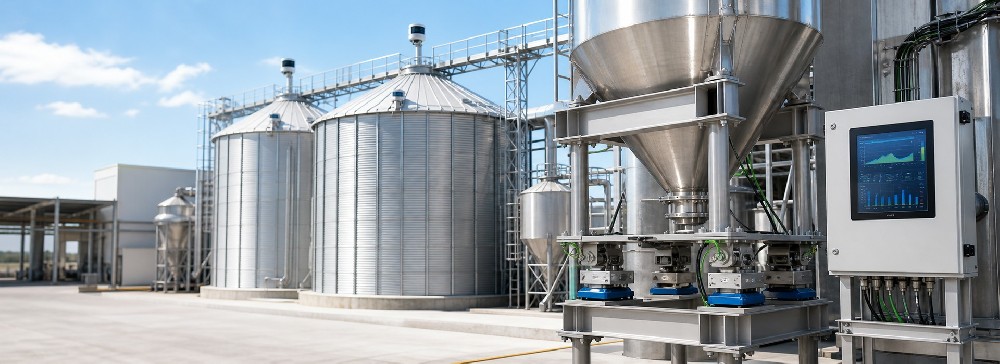
- Pharmaceutical raw material tanks, preparation tanks
- Metallurgical and chemical industry stirred reactor
- Light oil storage tank with still pipe
application benefits
Technical parameters
| Measuring medium | liquid/solid |
|---|---|
| Measuring range | 0.05-30m;0.10-150m |
| process connection | G3A 316L; stainless steel lined PTFE flange ≥DN65 |
| process temperature | -40-150℃ |
| process pressure | -0.1-1.6MPa |
| antenna | 63mm/76mm PTFE lens antenna |
| Measurement accuracy | ±1mm/±5mm |
| launch angle | 4°/3° |
| Protection level | IP67 |
| center frequency | 80 GHz |
| Power supply and output | Two-wire system DC24V / 4-20mA / HART; optional four-wire system AC220V, RS485/Modbus, dual relay, FF, PROFIBUS-PA/DP |
| Explosion-proof certification (optional) | Ex ia IIC T6 Ga / Ex db IIC T6 Gb |
| Parameter setting method | Display programming/Bluetooth/HART protocol/Tank side display |
| Electrical interface | M20×1.5 / 1/2 NPT |
| Seal selection | FKM / EPDM / FFKM, etc., confirm according to medium and temperature |
| Housing options | Aluminum alloy single cavity/double cavity, stainless steel single cavity/double cavity, ABS single cavity |
Note: The above are data reference values; optional output, explosion-proof, flange, sealing and temperature and pressure combinations are subject to the final selection confirmation and order code.
Selection guide
- Confirm whether the medium is liquid or solid, and provide dielectric properties, dust, foam, steam and stirring conditions.
- Check the beam angle and antenna size according to the effective range, installation nozzle, tank internal components and material surface shape.
- Temperature, pressure, corrosiveness and explosion-proof requirements must be checked in combination, not just the upper limit of a single item.
- Confirm process connection, power supply, output protocol, on-site display, Bluetooth commissioning and shell material.
Key points for installation and commissioning
- The antenna should be aimed vertically at the surface of the medium as much as possible, avoiding the feed inlet, agitator, ladders and reinforcement ribs.
- The diameter and length of the installed nozzle should match the antenna/beam, and false echo suppression should be performed if necessary.
- During commissioning, enter the empty height, full position, media type and response speed, and review them once at the low position and the high position.
Procurement and Technical Confirmation Checklist
- Media name, density/dielectric properties, corrosiveness, and foam, vapor, dust, crystallization or material buildup.
- Container/channel dimensions, normal and extreme ranges, installation location, nozzle or bracket dimensions, internal components and on-site photos.
- Process temperature and pressure combinations, wetted materials, sealing, protection, explosion-proof areas and ambient temperature.
- Power supply, output protocol, wire system, display/commissioning method, control system interface and accessory requirements.
- It is recommended to check the arrival acceptance: nameplate model, process connection, measuring range, material, power supply output, explosion-proof certificate and random documents.
FAQ
What media is MV-RD13 mainly suitable for measuring?
MV-RD13 is designed for liquids/solids. Common scenarios include pharmaceutical raw material tanks, preparation tanks, metallurgical and chemical stirring reactors, and light oil storage tanks with waveguides. If there is heavy foam, crystallization, serious hanging or extremely low dielectric constant, the echo conditions should be checked first.
What is the measuring range of MV-RD13?
The data range of MV-RD13 is 0.05-30m; 0.10-150m. The selection should be based on the effective range, blind zone, installation height and abnormal high and low positions, and should not be selected based on the total height of the container.
What are the allowed temperatures and pressures of the MV-RD13?
The reference temperature range of MV-RD13 is -40-150℃, and the reference pressure range is -0.1-1.6MPa. The upper temperature limit and the upper pressure limit cannot be used at the same time by default, and the sealing, flange and explosion-proof configurations need to be confirmed according to the combined process conditions.
How to choose the process connection of MV-RD13?
MV-RD13 can refer to G3A 316L; stainless steel lined PTFE flange ≥ DN65. The final connection should be determined based on the size of the nozzle, the tank structure, the size of the antenna or probe, the maintenance space and the corrosivity of the medium.
Can MV-RD13 be connected to PLC or DCS?
The reference output configuration of MV-RD13 is two-wire DC24V / 4-20mA / HART; optional four-wire AC220V, RS485/Modbus, dual relay, FF, PROFIBUS-PA/DP. The power supply, analog or digital protocol, station number, baud rate, as well as isolation and lightning protection requirements should be unified before ordering.
What information do I need to provide when making an inquiry about MV-RD13?
Inquiries for MV-RD13 require at least medium, range, temperature, pressure, process connection, material, explosion-proof area, power supply, output protocol, on-site photos and container size; for special process conditions, it is recommended to attach process drawings.
Ordering instructions
This page is used for procurement inquiry, technology selection and preliminary project design. Page parameters cannot replace project-level selection confirmation; when hazardous media, high temperature and pressure, explosion-proof, hygienic or strong corrosive process conditions are involved, please complete written technical confirmation before placing an order.